

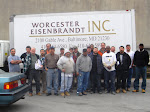
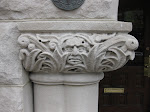

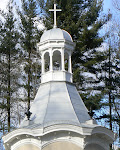
Here is a link to an article about some monument work that has kept APS busy the past few months:
http://heritagepreservation.org/Update/2010/10suVA.html
Tuesday, November 9, 2010

Monday, July 26, 2010
Historic Carpentry Merit Badge
I guess I'm a little late to the party as I just happened upon this:
http://www.usscouts.org/mb/mb139.asp
Teaching the old techniques to 21st century boys.
http://www.usscouts.org/mb/mb139.asp
Teaching the old techniques to 21st century boys.
Friday, June 11, 2010
50 years of Baltimore Heritage
Congratulations to Baltimore Heritage on 50 years of preserving Baltimore's architectural treasures!!!
See you at the Gala!
http://www.baltimoreheritage.org/programs/50th-anniversary/
See you at the Gala!
http://www.baltimoreheritage.org/programs/50th-anniversary/
Tuesday, June 1, 2010
Tool of the Week: Lasers!!
Here is a link to a week old article about using 3D imaging for documenting historic sites:
http://cosmiclog.msnbc.msn.com/_news/2010/05/25/4356809-monuments-immortalized-virtually
I can see a lot of uses for this technology in our field. Documentation is obvious, but the technology is also being used for part replication. Using 3D CNC routers any part can be duplicated from a 3D model. This would certainly help cut down costs for manufacturing by hand. Perhaps that is somewhat blasphemous, but the reality of budgets makes this type of process relevant. The number of hours to replicate several hand-carved Corinthian capitals maybe out of the reach of many property owners. Not to mention the ethics involved in reproducing something so exactly that the difference can't be told between old and new. A new plastic part replicated by a CNC machine would certainly be recognizable as non-original. The original wooden pieces could be preserved and stored safely for future generations.
The other possible use is virtual tourism. How about accessing a space that normally would be off limits like garret or attic spaces. Or perhaps recreating a site that is long vanished and would be impossible to replicate in the real world. Imagine walking the streets of ancient Rome or Dutch New Amsterdam.
I am a big fan of embracing the technology. The craft and the history have to be preserved, but progress and technological advancement should be embraced.
http://cosmiclog.msnbc.msn.com/_news/2010/05/25/4356809-monuments-immortalized-virtually
I can see a lot of uses for this technology in our field. Documentation is obvious, but the technology is also being used for part replication. Using 3D CNC routers any part can be duplicated from a 3D model. This would certainly help cut down costs for manufacturing by hand. Perhaps that is somewhat blasphemous, but the reality of budgets makes this type of process relevant. The number of hours to replicate several hand-carved Corinthian capitals maybe out of the reach of many property owners. Not to mention the ethics involved in reproducing something so exactly that the difference can't be told between old and new. A new plastic part replicated by a CNC machine would certainly be recognizable as non-original. The original wooden pieces could be preserved and stored safely for future generations.
The other possible use is virtual tourism. How about accessing a space that normally would be off limits like garret or attic spaces. Or perhaps recreating a site that is long vanished and would be impossible to replicate in the real world. Imagine walking the streets of ancient Rome or Dutch New Amsterdam.
I am a big fan of embracing the technology. The craft and the history have to be preserved, but progress and technological advancement should be embraced.
Wednesday, May 26, 2010
The Rocket's Red Glare!
Worcester Eisenbrand t isn't just about historic preservation and architectural conservation. We also make exhibits and props for museums. One of our latest projects involves exhibit pieces for the new visitor's center at Fort McHenry National Monument and Historic Shrine.
The mastermind behind our exhibit division, Exhibit Hues, is Hugh Bennett. Among the pieces he has created for the visitor's center is this replica rocket. Hugh used the a design from the Park Service to create the rocket out of new materials and then used his skills as a finisher to make it loo k like an original 19th century projectile. This one is just for viewing purposes, but wouldn't it be cool to make a working one? I don't know that I would have the nerve to light the fuse!
Exhibit Hues is also creating, with sculpter Bill Duffy, a bronze sculptural representation of Francis Scott Key. The rendering will be a focal point in the new visitor's center. The foundry is currently putting the finishing touches on Mr. Key. More on him later!
 t isn't just about historic preservation and architectural conservation. We also make exhibits and props for museums. One of our latest projects involves exhibit pieces for the new visitor's center at Fort McHenry National Monument and Historic Shrine.
The mastermind behind our exhibit division, Exhibit Hues, is Hugh Bennett. Among the pieces he has created for the visitor's center is this replica rocket. Hugh used the a design from the Park Service to create the rocket out of new materials and then used his skills as a finisher to make it loo
 k like an original 19th century projectile. This one is just for viewing purposes, but wouldn't it be cool to make a working one? I don't know that I would have the nerve to light the fuse!
Exhibit Hues is also creating, with sculpter Bill Duffy, a bronze sculptural representation of Francis Scott Key. The rendering will be a focal point in the new visitor's center. The foundry is currently putting the finishing touches on Mr. Key. More on him later!
Thursday, May 20, 2010
Metropolitan AME Church

One of our current restoration projects, the Metropolitan AME Church in Washington, DC, has been added to the National Trust for Historic Preservation's 2010 11 Most Endangered List. The church is renowned for it's architecture and stained glass windows, as well as its importance to the national AME church. The building is the mother church of the AME faith. While the building's location was important, as it place
 d it in the center of Washington DC, that location is now a detriment, as surrounding construction projects and larger buildings have contributed to structural problems with the church. WEI has been assisting the congregation with some of these problems but the scope of the damage will require much more extensive work. You can read more about the Metropolitan AME Church and the other 11 Most Endangered Sites here:
http://www.preservationnation.org/issues/11-most-endangered/
Friday, May 14, 2010
Tool of the Week: Photographs

There are a lot of ways that one can gather evidence for a restoration project. Looking at the remaining original materials is one. "Reading" an historic building is not simple and requires quite a bit of knowledge in the history of architecture and building technology. It helps to know about the period differences in nails and other fasteners, hardware, molding profiles and construction techniques. The complication is that so many people added and changed a particular historic building through its life, so it can be very difficult to tell when and where those changes occurred. Every now and then, however, you get lucky and find an historic photograph.
While the iconic image of the Thomas Point Shoal Lighthouse has been captured thousands of times, only a few historic images exist. Those images are going to prove invaluable to the restoration of the structure. Because the lighthouse suffers from such severe weather, it has been deteriorating at a rapid rate since it was built. Repairs have been continually made by lighthouse keepers from both the U. S. Lighthouse Service and the U. S. Coast Guard as
 well as numerous volunteers. These repairs have been made with limited resources and to act as improvements. Like any historic structure, repairs have altered the original appearance of the building. Much of the physical evidence has been lost to repair after repair after repair.
All of this makes these photographs very important. There are two in particular that interest me. The first is the earliest known photograph of the lighthouse. It was taken by Major Jared Smith on the 18th of August, 1885. There are several noticeable differences between today's lighthouse and the 1885 lighthouse, but the most important to me is the difference in the railings. The 1885 railings are taller and include a round railing above the lower sqare railing and pickets. The posts are curved on the outboard side and the round rail, or pipe, runs through a hole drilled through the wood.
The taller raili
 ng apparently lasted into the 20th century as evidenced by the other historic photograph. This one is of Assistant Lighthouse Keeper Earl C. Harris. It was taken sometime in the 1930's on the perimeter deck of the lighthouse. Behind him is the railing, including the taller rail. While some of the detail is hard to discern, it provides the best evidence of the rail's appearance that we have. Granted, at this point the railing is 50 years old and has, doubtlessly, been repaired several times.
Whether or not the railing gets restored to its 1885 appearance has yet to be determined. The priority for the U. S. Lighthouse Society is the preservation of the structure. They will also have to determine the dates of interpretation for the deck. It may be that the current railing design is the most appropriate. There are still many decisions to be made before deciding if the railing gets changed, but there is evidence if an historic railing replication is desired. Not every property owner is lucky enough to find historic photographs of their building. In fact, more often than not, historic images don't exist. When they do, they can be very valuable resources.
If you are interested in the preservation of the Thomas Point Shoal Lighthouse please visit their website: http://www.thomaspointlighthouse.org/
1885 Lighthouse photograph from the National Archives- Photograph 26-LG-25-54
Photograph of Earl C. Harris courtesy of the U. S. Lighthouse Society
Subscribe to:
Posts (Atom)